
Anxiety Affirmations for Sleep: Calm Your Mind Before Bedtime
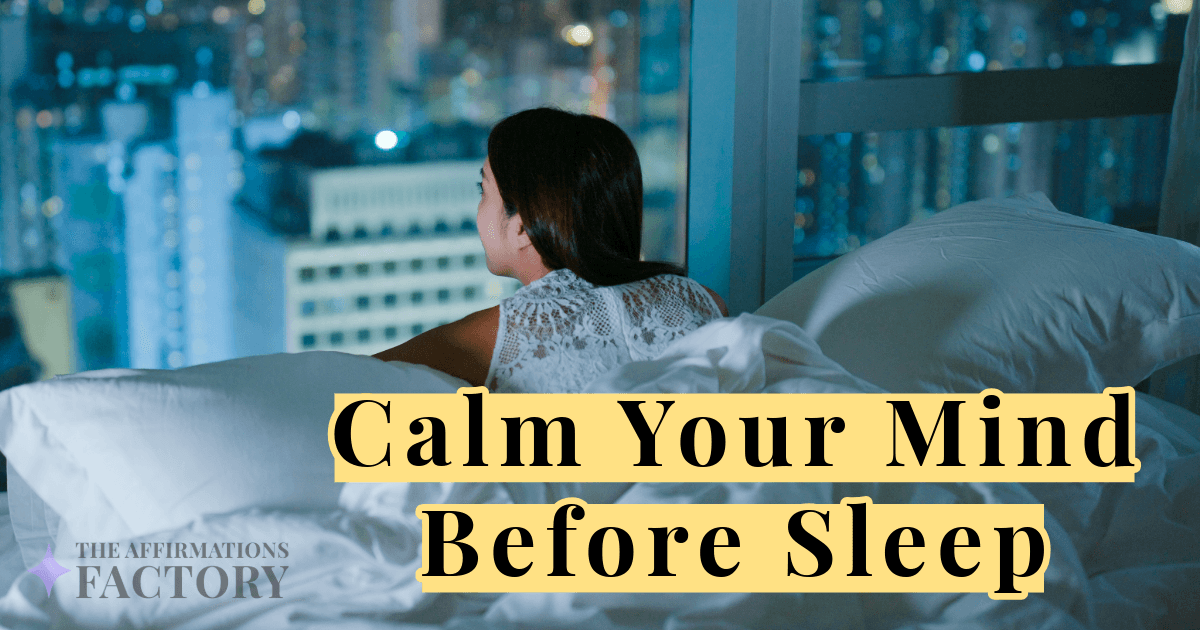
We’ve all been there – exhausted after a long day, desperately wanting sleep. Yet, somehow our minds choose this precise moment to replay every worry, plan tomorrow’s schedule, or analyze that awkward interaction from five years ago. Sleep anxiety is a frustrating cycle: the more you worry about not sleeping, the harder it becomes to fall asleep.
I know this pattern intimately. As someone who has struggled with racing thoughts at bedtime, I’ve spent countless nights staring at the ceiling, watching the hours tick by, feeling simultaneously wired and tired. That’s why I’ve developed this collection of anxiety affirmations specifically designed to calm your mind before sleep.
These aren’t just pleasant phrases – they’re powerful tools that work with your brain’s natural mechanisms to shift from the alert, problem-solving state into the relaxed, receptive state necessary for restful sleep.
The Science Behind Sleep Anxiety and Affirmations
Before diving into the affirmations themselves, let’s understand why they’re particularly effective for bedtime anxiety.
According to research cited by The Sleep Reset, neuroimaging studies have shown that self-affirmation activates the ventromedial prefrontal cortex – an area of the brain involved in positive valuation and self-related information processing. This activation can help counteract the amygdala’s stress response, which is often in overdrive when anxiety disrupts sleep.
Additionally, repeating calming statements before bed helps the brain release less cortisol (the stress hormone) and more oxytocin (the bonding hormone), creating biochemical conditions conducive to relaxation and sleep.
The beauty of affirmations is that they leverage neuroplasticity – your brain’s ability to form new connections. With consistent practice, you can actually create new neural pathways that support restful sleep rather than anxious rumination.
How Sleep Affirmations Work
Unlike daytime affirmations that might focus on motivation or productivity, effective sleep affirmations:
- Gently release the day’s tensions and worries
- Signal to your body that it’s safe to relax
- Interrupt anxious thought patterns
- Redirect your focus to calming, present-moment awareness
- Prepare your mind and body for the natural transition to sleep
Inner Tune emphasizes that affirmations work best when they feel authentic and address your specific sleep challenges. The ones I’ve included below are designed to target common aspects of sleep anxiety, but feel free to modify them to reflect your personal experience better.
15 Anxiety Affirmations for Better Sleep
I’ve organized these affirmations to address different aspects of sleep anxiety, with specific guidance on how to use each one effectively.
For Releasing the Day’s Worries
1. I release the events of today, knowing tomorrow is a fresh start.
When to use: When replaying the day’s events or worrying about things you did or didn’t do.
How to practice: Lie comfortably in bed with your palms open, facing upward. As you repeat this affirmation, visualize the day’s events as leaves floating away on a gentle stream, creating distance between you and any lingering concerns.
2. I’ve done enough today, and now I deserve rest.
When to use: When feeling guilty about unfinished tasks or believing you haven’t earned sleep.
How to practice: Place one hand on your heart and take three deep breaths. As you repeat this affirmation, mentally list 2-3 things you accomplished today, no matter how small, acknowledging that your efforts deserve to be followed by restoration.
3. Tomorrow’s problems can wait for tomorrow’s energy.
When to use: When your mind is planning, problem-solving, or creating to-do lists for tomorrow.
How to practice: Keep a notepad by your bed. If tomorrow’s tasks are circling in your mind, briefly write them down, then set the pad aside while repeating this affirmation. This symbolically transfers responsibility from your nighttime mind to your future self.
For Calming Physical Tension
4. With each breath, my body becomes heavier and more relaxed.
When to use: When physically tense or unable to get comfortable.
How to practice: Combining affirmations with progressive relaxation. Starting at your toes and moving upward, tense each muscle group, then release it, while repeating this affirmation. Feel the literal heaviness that comes with deep relaxation.
5. I release tension with each exhale, inviting peaceful sleep with each inhale.
When to use: When feeling physically anxious with shallow breathing or a racing heart.
How to practice: Place one hand on your belly and focus on deep, diaphragmatic breathing. As you exhale, mentally say “release,” and as you inhale, think “peace.” After several breaths, add the full affirmation, continuing the slow breathing pattern.
6. My body knows how to sleep naturally, and I trust its wisdom.
When to use: When overthinking the process of falling asleep or trying too hard to make it happen.
How to practice: Lie in a comfortable position and scan your body from head to toe, thanking each part for its work today. As you repeat this affirmation, remind yourself that sleep is a natural process your body has performed thousands of times without your conscious effort.
For Quieting an Overactive Mind
7. My thoughts are slowing down, like ripples on a quiet pond.
When to use: When experiencing racing thoughts or mental chatter.
How to practice: Visualize your thoughts as ripples on water that gradually become smaller and more distant. With each repetition of this affirmation, imagine the surface becoming calmer, reflecting the peaceful night sky.
8. I choose peace over worry, rest over rumination.
When to use: When caught in worry loops or ruminating on problems.
How to practice: When you notice your mind worrying, gently place your hand on your forehead. Take a deep breath and repeat this affirmation, choosing to redirect your attention from problem-solving to peace, both physically and mentally.
9. My mind is becoming quiet, making space for deep rest.
When to use: When mental activity feels loud and demanding.
How to practice: Imagine a volume dial for your thoughts. As you repeat this affirmation, visualize yourself slowly turning down the volume until your thoughts become a quiet background hum that no longer demands attention.
For Addressing Sleep Anxiety Directly
10. Even if I don’t sleep perfectly, my body is still getting rest.
When to use: When anxious about not falling asleep or the quality of your sleep.
How to practice: The Sleep Reset notes that sleep anxiety often stems from perfectionism about sleep. Repeat this affirmation while reminding yourself that rest itself is beneficial, taking pressure off the need to sleep “perfectly.”
11. I am safe in this moment, and it’s safe to let go into sleep.
When to use: When feeling vulnerable, unsafe, or unable to let your guard down.
How to practice: Create a physical sense of safety by arranging your bedding in a comforting way – perhaps pulling the covers up to your chin or surrounding yourself with pillows. From this secure space, repeat the affirmation while focusing on the physical sensations of safety and comfort.
12. Sleep comes naturally when I stop chasing it.
When to use: When feeling frustrated or trying too hard to fall asleep.
How to practice: Paradoxically, trying to force sleep often pushes it further away. Repeat this affirmation while shifting your goal from “falling asleep” to simply “resting comfortably” – removing the pressure that fuels sleep anxiety.
For Creating Positive Sleep Expectations
13. I welcome deep, restorative sleep that nourishes my mind and body.
When to use: As part of your bedtime routine, setting a positive intention for the night.
How to practice: Make this the first affirmation you repeat after getting into bed, before any anxiety has a chance to build. Say it with genuine welcome and expectation, as if greeting a reliable friend who visits each night.
14. With each night of practice, falling asleep becomes easier and more natural.
When to use: When feeling discouraged about sleep difficulties or doubting improvement.
How to practice: Consistency builds new neural pathways. Repeat this affirmation with patience, reminding yourself that you’re retraining your brain and body, and improvement comes with practice.
15. I trust in my ability to relax, rest, and rejuvenate through the night.
When to use: When doubting your capacity for good sleep or healing from sleep difficulties.
How to practice: Place one hand on your heart and one on your belly. As you repeat this affirmation, connect with your innate capacity for healing and restoration, which remains present even during periods of sleep difficulty.
Creating a Sleep-Promoting Affirmation Practice
To maximize the effectiveness of these affirmations, consider integrating them into a consistent bedtime routine:
Wind-Down Ritual (20-30 minutes before bed)
- Dim the lights and put away electronic devices
- Do something gentle and non-stimulating (light stretching, reading, etc.)
- Write down any lingering concerns or to-dos to symbolically set them aside
- Choose 1-2 affirmations that address your specific sleep challenges tonight
Bedtime Practice (5-10 minutes)
- Get comfortable in bed with the lights low or off
- Take 5-10 deep, slow breaths to activate your parasympathetic nervous system
- Repeat your chosen affirmation(s) silently or in a whisper
- If your mind wanders, gently bring it back to the affirmation without judgment
Middle-of-Night Awakenings
- Keep your chosen affirmation in mind for nighttime awakenings
- If you wake up anxious, place one hand on your heart
- Take three slow breaths
- Repeat your affirmation while maintaining a relaxed attitude toward falling back asleep
Enhancing Affirmations with Complementary Practices
Inner Tune suggests combining affirmations with other sleep-promoting practices for maximum benefit:
Gentle Yoga or Stretching
Pair physical relaxation with mental relaxation by repeating your affirmations during gentle bedtime stretches.
Sleep-Promoting Sounds
Record yourself speaking your favorite affirmations over calming sounds or music to create a personalized sleep meditation.
Aromatherapy
Associate certain scents (lavender, chamomile) with your affirmation practice to create a multi-sensory cue for relaxation.
When to Seek Additional Support
While affirmations can be powerful tools for managing sleep anxiety, persistent insomnia may benefit from additional approaches:
- Cognitive Behavioral Therapy for Insomnia (CBT-I) has strong research support for treating chronic sleep problems
- A sleep specialist can rule out physical conditions that might be affecting your sleep
- Your primary care provider can discuss whether short-term medication might be appropriate
My Personal Experience
The affirmation that transformed my relationship with sleep is “Sleep comes naturally when I stop chasing it.” For years, I approached bedtime with determination and effort – I was going to MAKE myself fall asleep through sheer willpower. Unsurprisingly, this approach increased my anxiety and made sleep more elusive.
This simple affirmation helped me shift from pursuing sleep to allowing it to come. I began to focus on simply resting comfortably, trusting that sleep would arrive in its own time. This subtle but powerful shift reduced my sleep anxiety dramatically.
I now keep this affirmation written on a small card on my nightstand. On difficult nights, I gently remind myself that my only job is to create restful conditions – sleep itself will come naturally when I stop trying to force it.
Your Sleep Journey
Which of these anxiety affirmations for sleep resonates most strongly with you? How might you incorporate it into your bedtime routine? Remember that consistency is key – the more regularly you practice, the more effective these affirmations become in rewiring your brain’s approach to sleep.
I’d love to hear about your experiences with these affirmations in the comments below!